Highlights of Bhutan

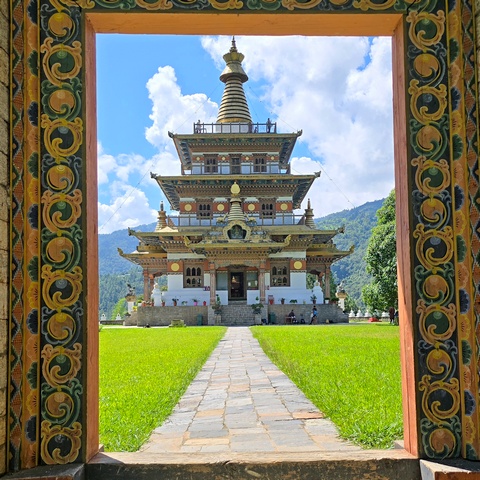
Bhutan's beautiful Khamsum Yulley Namgyal Chorten, a four-story stupa, framed by intricate woodwork.

Having traveled through the Himalayas of India and Nepal on several adventures in search of snow leopards, ancient temples, and pristine mountain landscapes, I thought I knew what to expect when we set out on our recent scouting trip to Bhutan. But Bhutan was nothing like the Himalayas of India or Nepal (or anywhere, for that matter), and I cherish the time we spent discovering the many surprises of this enchanting Himalayan kingdom.

From its colorful, thoughtfully preserved cultural heritage to exceptional luxury lodges and ancient monasteries situated in striking mountain landscapes, Bhutan offers a welcome respite from the stressful, fast-paced world we inhabit in the U.S. It epitomizes slow travel at its finest, allowing you space to breathe and contemplate, and just reflect.

Whether you spend your days hiking through tranquil pine forests decorated with fluttering prayer flags, delving into Buddhist history and philosophy while wandering through ancient fortresses, or savoring farm-to-table meals and soothing spa treatments, Bhutan has a lot to offer for discerning travelers looking for relaxation and cultural discovery in a world so different from the U.S.

It’s always difficult to decide how to summarize a perspective-enhancing journey to a far corner of the world in a single blog post. For this one, I’ve decided to keep it simple and choose 12 images from our trip that capture the essence of Bhutan. Enjoy!
Bhutan's Phallic Obsession

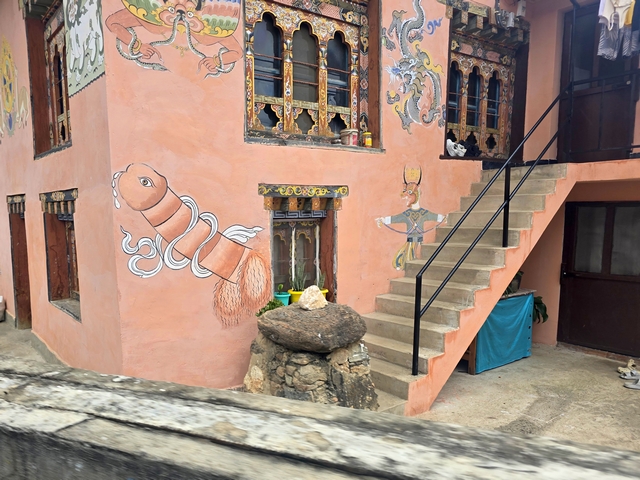
A colorful building in Bhutan's Punakha Valley adorned with artwork showing a large phallus
It's not graffiti, it's art!

When thinking about iconic images that capture Bhutan, one of the first that comes to mind is the phallus. Visitors to Bhutan should be prepared to see phallic artwork in a diversity of depictions and mediums, from artistic renderings on the sides of buildings to carved wooden phalli hanging off rooftops and even little phallic necklaces. The phallus is a symbol of good luck widely displayed throughout the Bhutanese countryside, and it’s believed to ward off bad spirits while also symbolizing fertility and power. These beliefs date back to the “Divine Madman” Drukpa Kunley, a 15th-century Tibetan Buddhist monk who used his “thunderbolt of flaming wisdom” (yes, that’s exactly what you think it is!) to bring enlightenment to other beings (mostly women). If this has aroused your attention, read up on Drukpa Kunley and be sure to visit the Chimi Lhakang monastery in Punakha – it was one of our favorite stops on our journey!

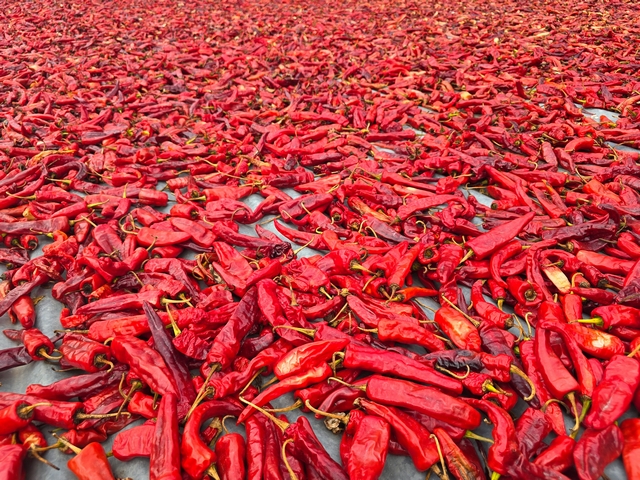
Bhutan's Infamous Red Chiles

Hundreds of red chiles drying on a rooftop in the Paro Valley of Bhutan.
Chile lovers will delight in many of Bhutan's tasty local dishes.

In addition to the proliferation of phalluses throughout Bhutan, another thing you will notice right away is the proliferation of chiles, which you will see drying on rooftops and alongside the roads. Chiles are a staple of Bhutanese cooking and they’re part of the national identity. Ema Datshi, a stew-like dish of chiles simmered in tangy yak or cow’s cheese, is the national dish and a must-try rite of passage for any traveler. The Bhutanese like their chiles spicy, but they are good about serving milder versions for travelers like us, who (despite liking somewhat spicy food) cannot handle the heat!

Temples, Monks, and Monasteries

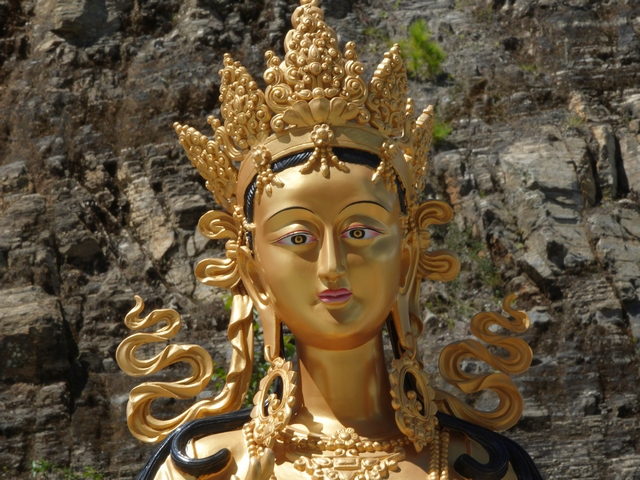
Portrait of the face of a golden Dakini statue, with elaborate crown.
Bhutan's hundreds of temples each have their own unique history, artwork, statues, and legends.

More than 75% of Bhutan’s people are Buddhist, and Vajrayana Buddhism is deeply woven into all aspects of everyday life, from education to governance to individual identity. Temples, monasteries, and shrines punctuate the landscape throughout the entire country, and it’s common to see Bhutan’s 7000+ red-robed monks bustling about. We received a special blessing from a lama in Gangtey who had just completed three years of meditation – something I still can’t wrap my Western mind around!

The Wheel of Life

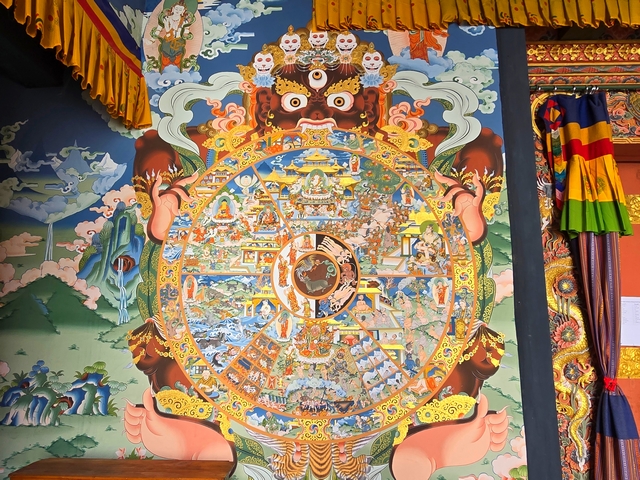
Close-up painting of the Wheel of Life, showing intricate depictions of the entire cycle of life.
The Wheel of Life condenses the entire cycle of birth, death, and rebirth into a single, intricate artwork.

One of the most striking and recurring works of art you will see in Bhutan’s Buddhist temples and monasteries is the Wheel of Life. This circular mural, often painted near temple entrances, illustrates the endless cycle of birth, death, and rebirth in intricate, colorful detail. While each rendition differs slightly in artistic style, all share the same powerful message about the impermanence of life and the path to enlightenment. Beyond its spiritual significance, the Wheel of Life is simply mesmerizing to look at, reeling you in deeper the more time you spend studying each rendition’s fine details.

The Tiger’s Nest Monastery

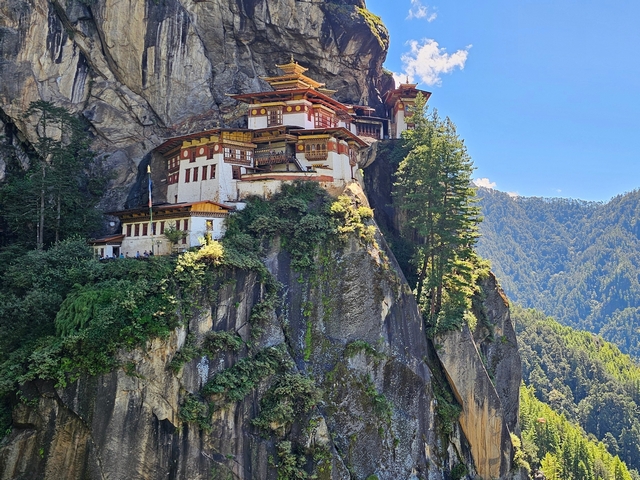
Tiger's Nest Monastery perched on a cliffside above the Paro Valley in Bhutan
The seemingly impossible perch of the Tiger's Nest is well worth the five-mile hike.

If there is one monastery you cannot miss while visiting Bhutan, it’s the deservedly iconic Tiger’s Nest. Legend has it that Guru Rinpoche, who brought Buddhism to Bhutan in the 8th century, flew to the current-day Tiger’s Nest on the back of a tigress to meditate in a cave and then subdue evil spirits. The monastery was constructed at this sacred site in 1692, and the pleasant five-mile hike to explore this gravity-defying sanctuary in the sky was a highlight of our journey.

Thimphu’s Golden Buddha

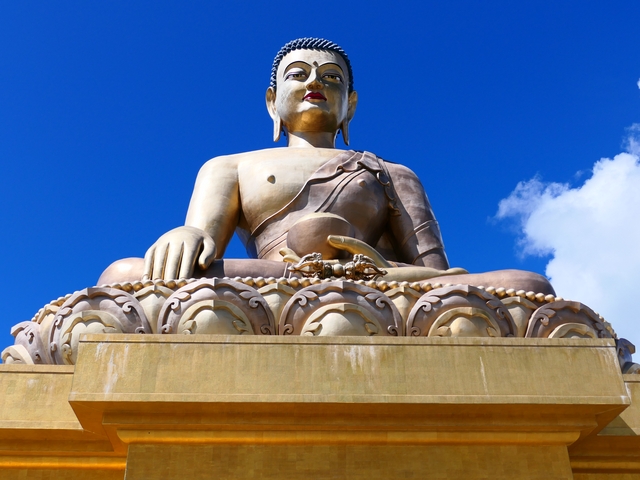
Golden Buddha Dordenma statue overlooking Thimphu Valley in Bhutan

In addition to the Tiger’s Nest, another don’t-miss attraction in Bhutan is the massive golden Buddha statue that looms over the capital city of Thimpu. It will capture your attention when you see it from afar, but the real beauty of this temple lies inside (where photographs are strictly forbidden). With thousands of nearly identical golden Buddha statues perfectly arranged in synchronous rows, and intricately carved golden pillars and larger-than-life Buddha statues, the Buddha’s interior was one of the most jaw-dropping temples we have ever set foot in.

Punakha Dzong

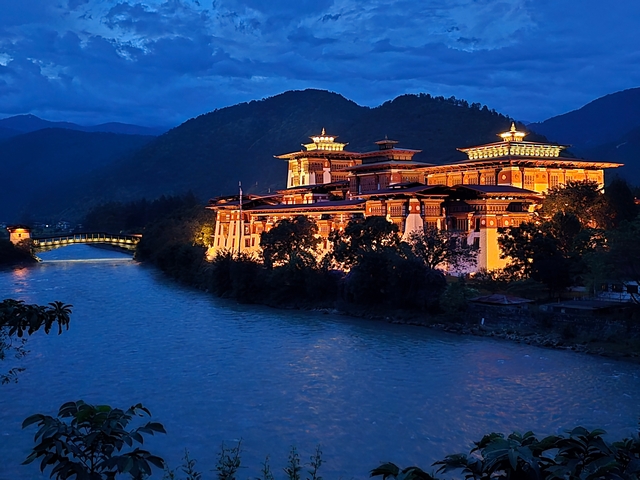
Punakha Dzong in Bhutan all lit up at night
Punakha Dzong is picturesque at any time of day, but especially so when it's illuminated at night.

Every major town in Bhutan has a dzong, a fortified monastery that serves as both the administrative and spiritual capital of the region. The Punakha Dzong was my favorite of all the dzongs we visited. Its spectacular location near the confluence of two glacially-fed rivers offers excellent photo opps, accentuated by the quaint covered wooden bridge leading into it. As the second oldest and second largest dzong in Bhutan (due in part to Punakha being the former capital city), Punakha Dzong has borne witness to significant historical events, like the coronation of the first king in 1907 and the royal wedding of the current king in 2011. One of the temples within the dzong contains the 375-year-old mummified body of Ngawang Namgyal, the unifier of Bhutan, and only the king of Bhutan and a select few can enter the temple to receive his blessings (unfortunately, we didn’t make the list!).

Bhutan's Infamous Festivals

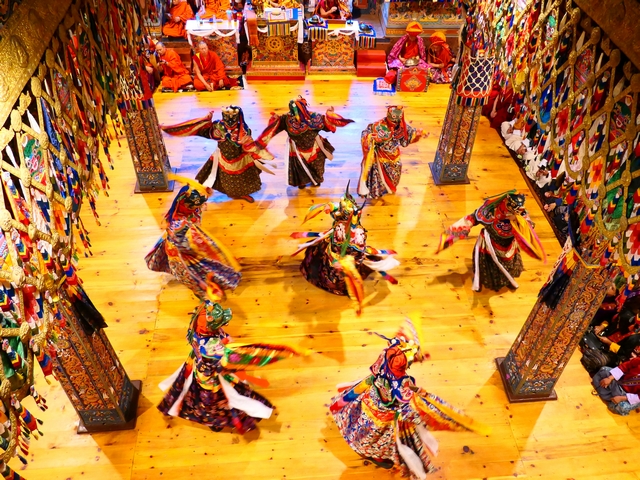
Monks inside a Monastery practicing a masked dance at Punakha Dzong in Bhutan
Getting to see these monks practicing sacred masked dances in anticipation of the annual Wangdue Phodrang Festival was a highlight of our trip.

Bhutan’s dzongs are often the location of its notorious festivals, or Tschechus. Planning your visit to include a festival is a spectacular way to experience the vibrant traditional culture of this deeply Buddhist country (and be sure to plan your trip at least one year out to ensure hotel space). There are festivals throughout the year to celebrate various events, from the coronation of the king to the arrival of migratory black-necked cranes, as well as festivals for general spiritual cleansing or to ward off evil. We were in Punakha and Paro just before their major annual festivals, and we felt privileged to be invited inside two monasteries to watch the monks practice their sacred dances in full costume.

Exquisite Luxury Lodges

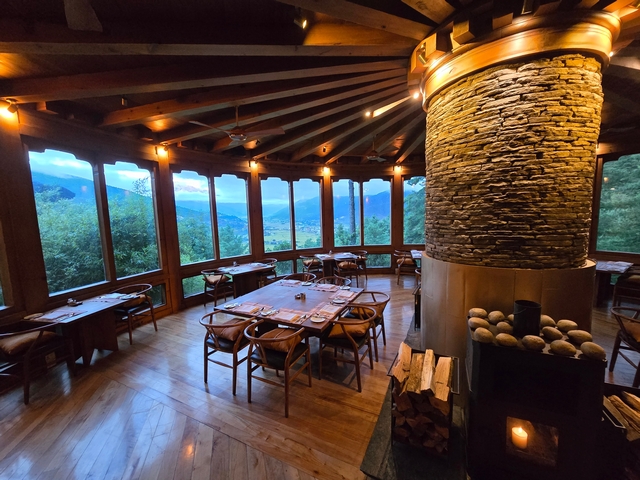
Looking across the dining room of Como Uma Paro hotel in Bhutan, with lush green landscapes of the Paro Valley visible out the windows
Bhutan's luxury lodges offer exceptional locations, service, and amenities- be warned, you will not want to leave your lodge!

As an exclusive destination that has purposefully sought low-volume/ high-dollar tourism since it first opened to foreigners in 1974, Bhutan is a prime destination for luxury travelers seeking novel experiences without the crowds. Its top-notch luxury lodges provide tranquility, refinement, and some of the most exceptional service we have encountered anywhere in the world. With soothing spa treatments (including the traditional Bhutanese hot stone bath), on-site cultural immersion activities, and splendid properties that beg for exploration, you will not want to leave your lodge. With direct flights to Bhutan from Delhi, Kathmandu, and Bangkok, a Bhutan extension with several nights at a premium lodge is the perfect complement to a Nepal trek or Indian adventure.

Dochula Pass

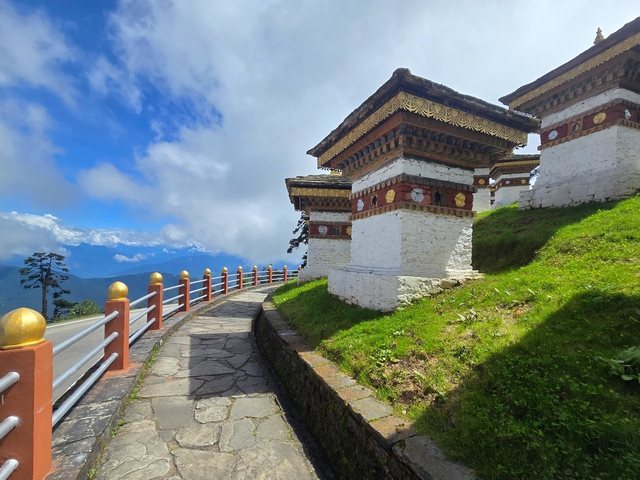
Ornate chortens with blue skies and views of Himalayan peaks behind them at Dochula Pass, Bhutan
Dochula Pass is a tranquil and sacred space that offers distant views of snowy Himalayan peaks on a clear day.

If you are traveling within Bhutan, you will likely traverse one of Bhutan’s many high mountain passes, which locals believe are sacred realms where the divine and the earthly collide. Located between the capital city of Thimpu and Punakha, Dochula Pass is one of Bhutan’s most famous mountain passes. 108 chortens (shrines) were constructed at the pass in 2004 to memorialize Bhutanese soldiers killed in battle, and a beautiful temple celebrating 100 years of monarchy sits against majestic views of distant snow-capped peaks on a clear day.

Bhutan's Colorful Prayer Flags

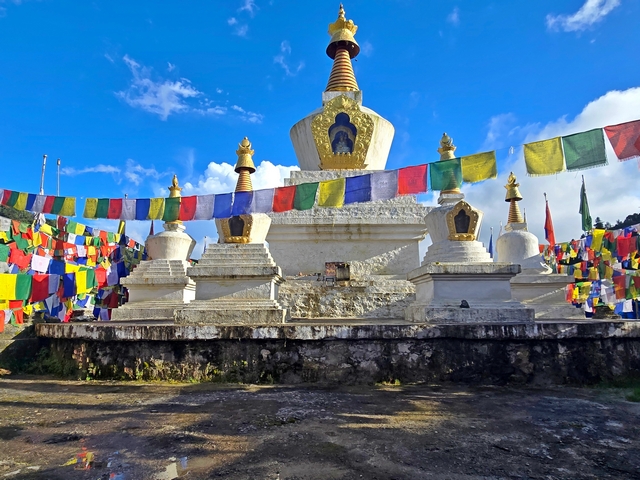
A gold-capped stupa flanked by smaller stupas and fluttering prayer flags at Gangtey pass Bhutan
The Bhutanese are deeply spiritual people, and even the tiniest rural villages boast colorful prayer flags and reverent stupas.

A common sight throughout all of Bhutan is that of colorful prayer flags flapping in the breeze, oftentimes at mountain passes, summits, and atop temples and stupas. Prayer flags typically come in five colors, each correlated with a natural element (blue for sky, white for air, red for fire, green for water, and yellow for earth). They express gratitude and spread blessings for safe passage and enlightenment as the wind carries prayers through the surrounding countryside. Many Bhutanese are deeply spiritual, with their daily lives guided by ritual and an awareness of auspicious forces. When we went to raise a set of prayer flags for our group near Dochula Pass, our guide insisted that we do it on an auspicious date to ensure the maximum effectiveness of our blessings and goodwill.

The Gangtey Valley

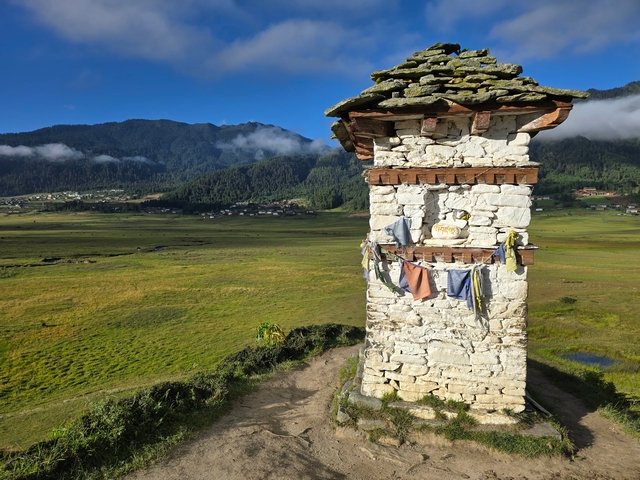
A slightly worn chorten with sun-bleached prayer flags, looking over the open fields of Bhutan's Gangtey valley at dawn
The wide open, grassy wetlands of the Gangtey Valley are prime over-wintering habitat for the rare black-necked crane.

For nature lovers hoping to catch a glimpse of some of Bhutan’s unique wildlife, or for travelers looking to get a little further off the beaten track, a visit to the bucolic Gangtey Valley is well worth the six-hour drive. This picturesque U-shaped valley, framed by the rugged Black Mountain range, is best visited in November, when you can see the endangered black-necked cranes that migrate here from the Tibetan Plateau to overwinter. The Black-necked Crane Festival is held annually on November 11th, and even if you miss the festival or crane season, you can visit the two rehabilitated cranes at the Crane Information Center. We enjoyed exploring this peaceful valley via hikes, bike rides, and early morning runs – keep an eye out for foxes, Himalayan black bears, and dhole (Asiatic wild dogs) while hiking the local trails!

Out of all of the places we have visited, Bhutan stands out as a unique, compelling, and intriguing destination that brings visitors a pervading sense of tranquility, spirituality, and calm. When you are ready to explore this traditional kingdom for yourself, reach out and allow us to plan your fully customized adventure!

Your adventure travel aficionado,

Alexis

Let’s Stay In Touch

Subscribe to our newsletter